Skip to content

After Ophelia.

On view at Paris Photo, through November 2025 · Updated May 2026

A two-part video project on identity, inherited interpretation, and what remains when everyone tells your story for you.

After Ophelia rendered portrait in water

We are all written by others, then rewritten by their machines.

Overview

When LLM deep research tools started appearing, I used one to look myself up. Some of what came back was outdated. Some was wrong entirely. Those details had been written by others, preserved in places I could not reach or correct. The model cited them as though they were facts. I became what had been said about me.

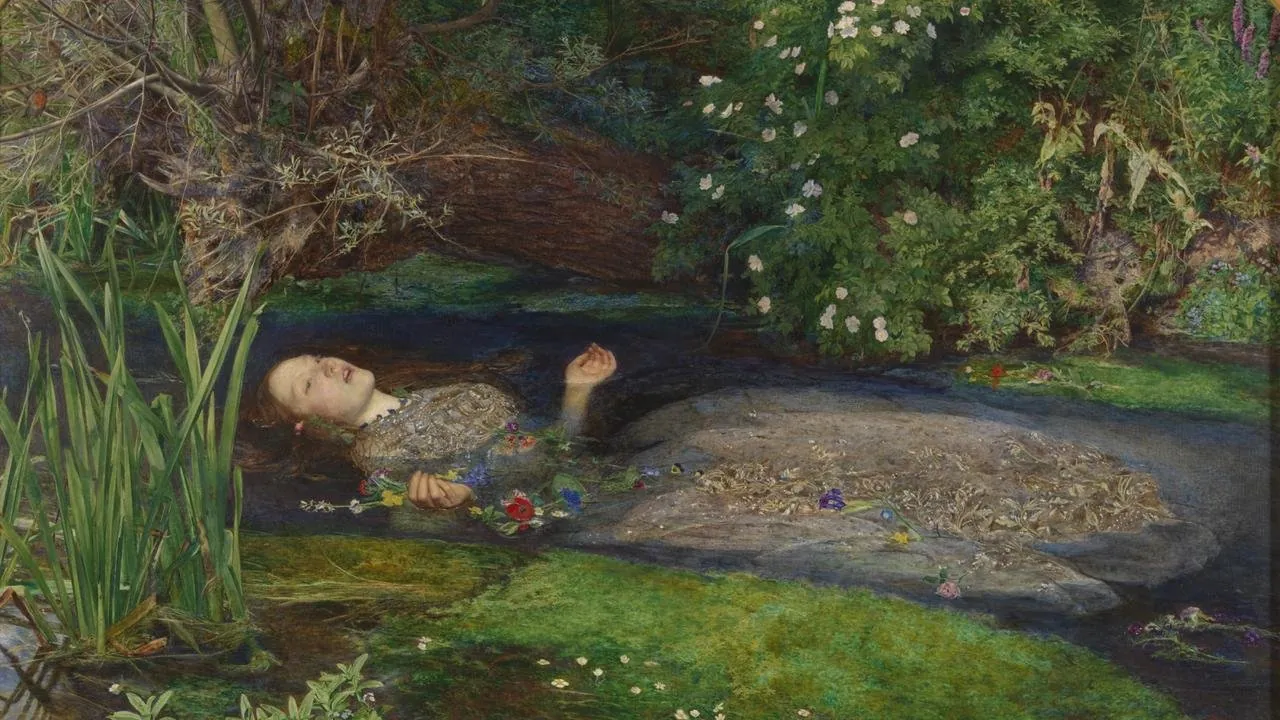
Ophelia speaks fewer than 60 times in Hamlet, yet essays, paintings, films, criticism, online commentary, and now AI-generated analyses continue to claim they can explain who she really was. John Everett Millais' 1852 painting gave her the face many people still imagine. Academic discourse gave her symbolic weight. YouTube video essays, Reddit threads, search summaries, and pop culture keep extending the cycle.

Archival-style image associated with Ophelia source research
Archive material
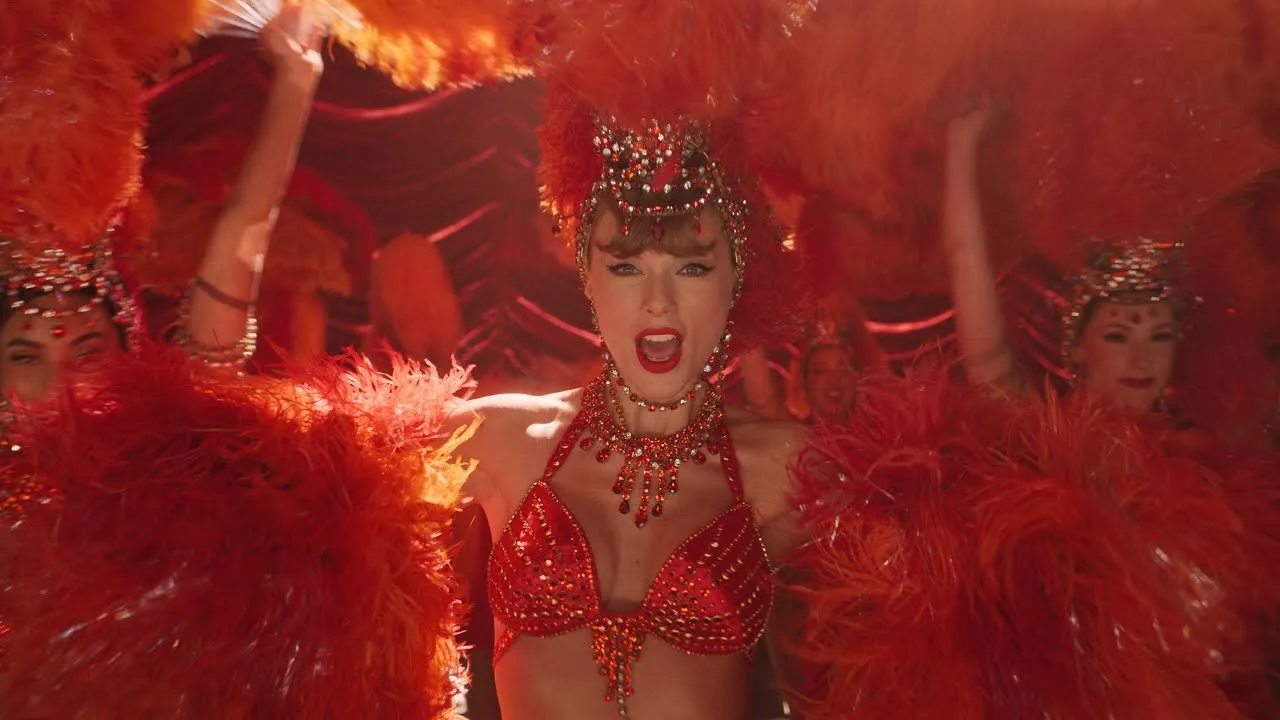
Pop culture reference image connected to Ophelia's afterlife
Contemporary reference

Taylor Swift's 2025 song “The Fate of Ophelia” extends the same pattern into mass pop culture. Ophelia remains a vessel for other people's meanings, her story endlessly rewritten by whoever holds the microphone, or the algorithm.

Now, when you search for Ophelia, AI systems synthesize all of this into confident summaries, each generation of technology adding another layer between the character and whoever she might have been. After Ophelia traces how a person's image is built, stabilized, and automated by others. When everyone tells your story for you, what remains that is actually yours?

The work does not try to recover a single true Ophelia. Instead, it makes visible the accumulation of image, explanation, repetition, platform, archive, and machine. Each version becomes another layer in a system of representation, making the construction visible rather than pretending it can be cleanly undone.

Works

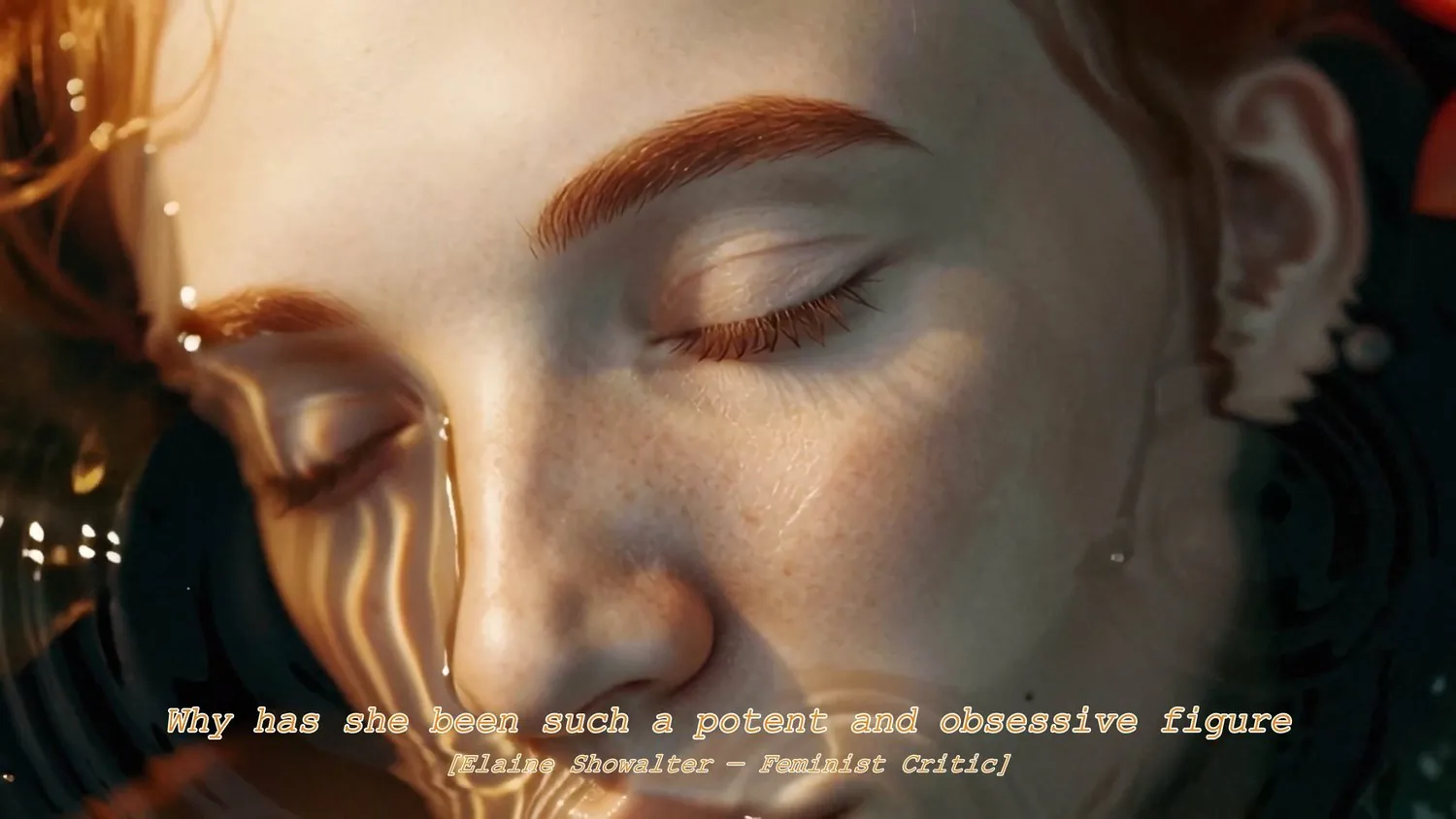
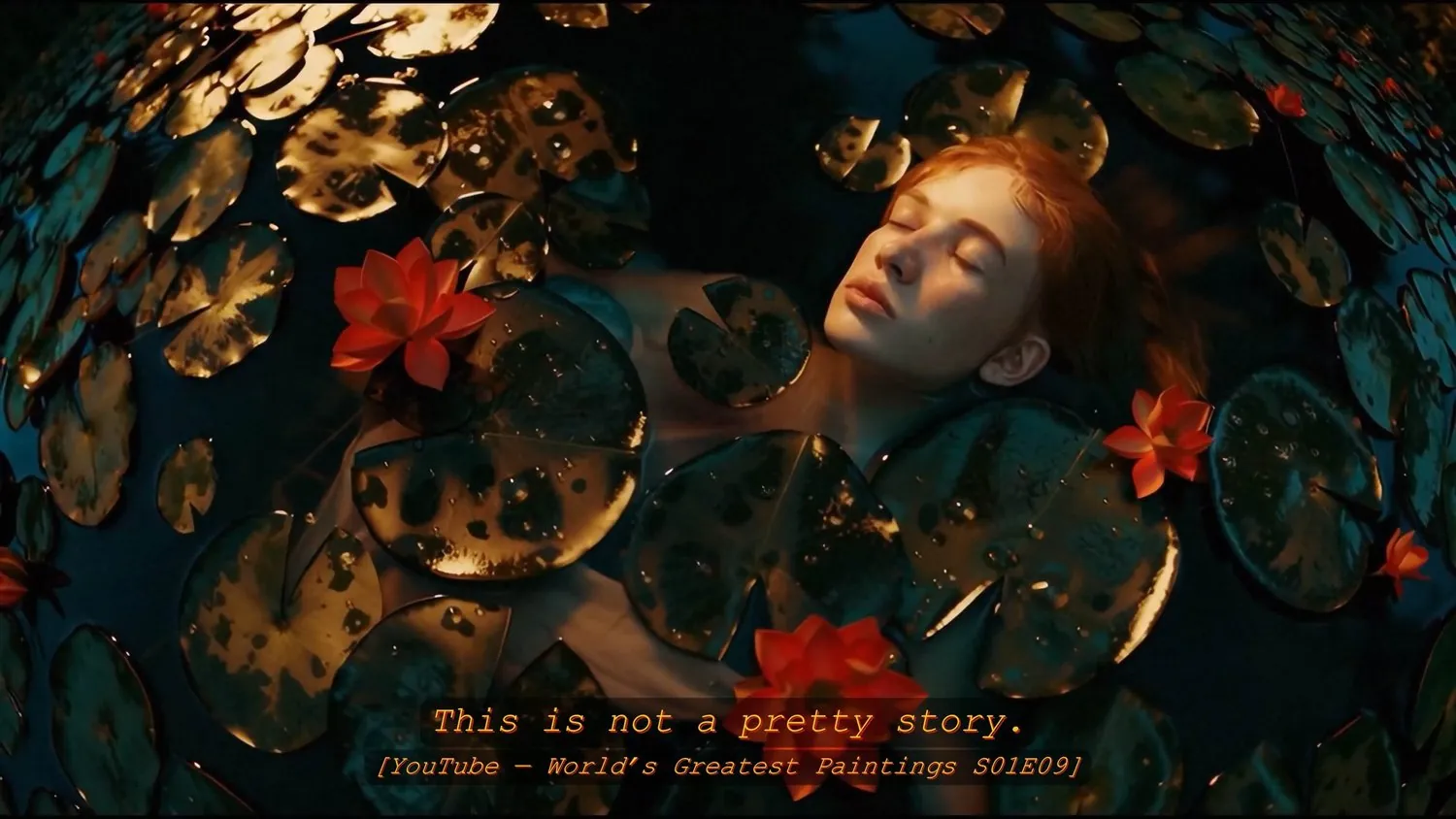
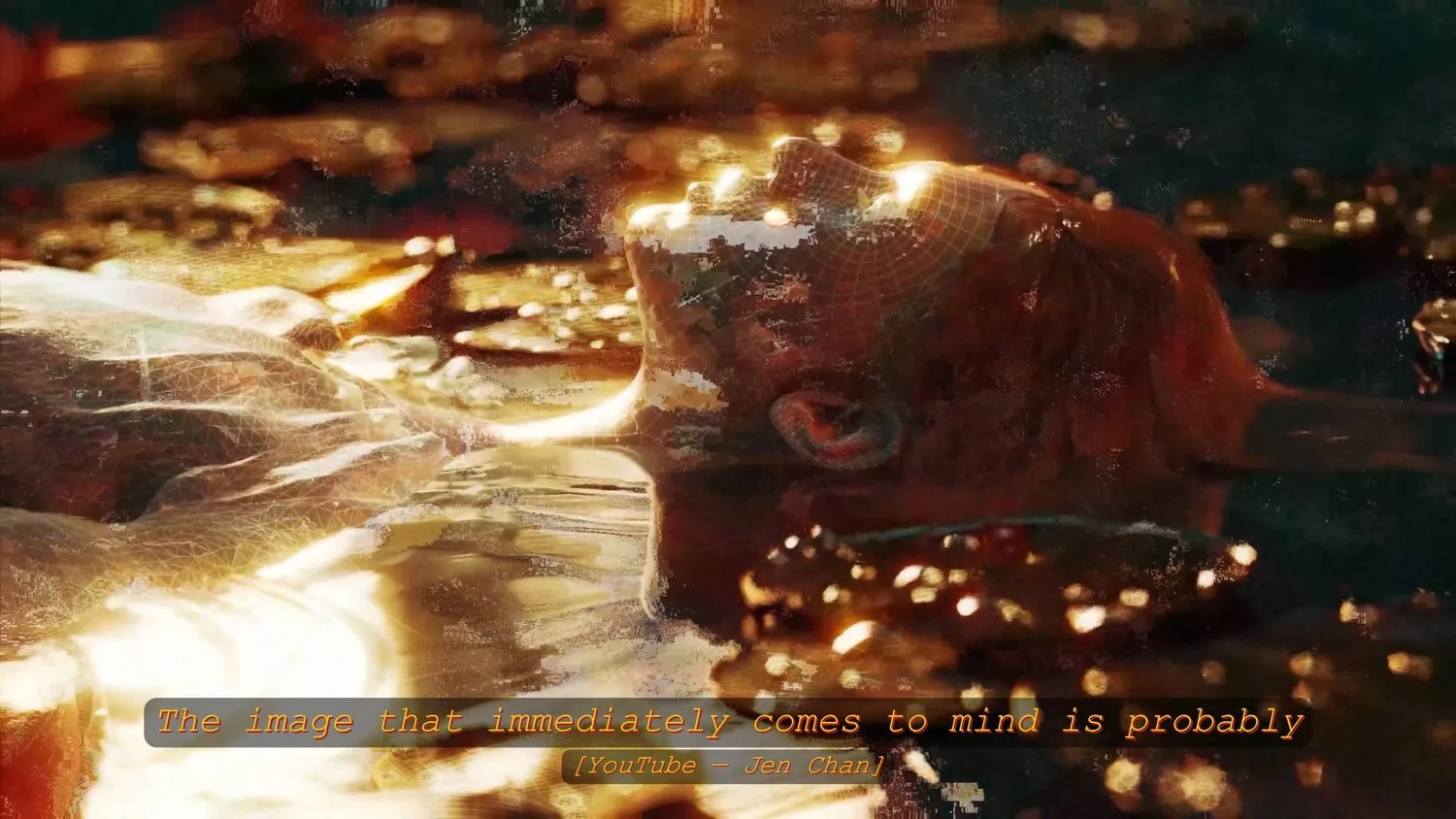
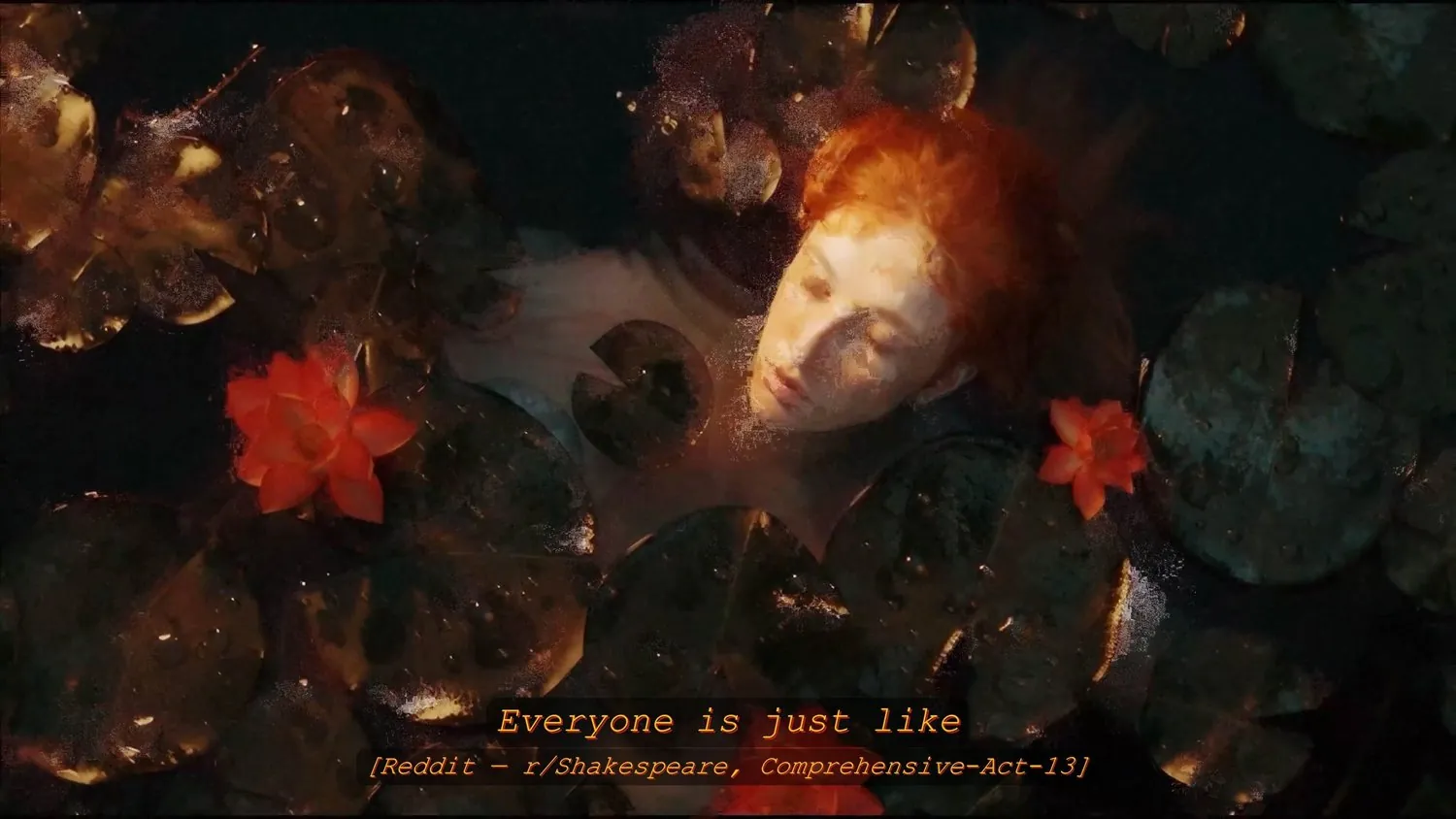
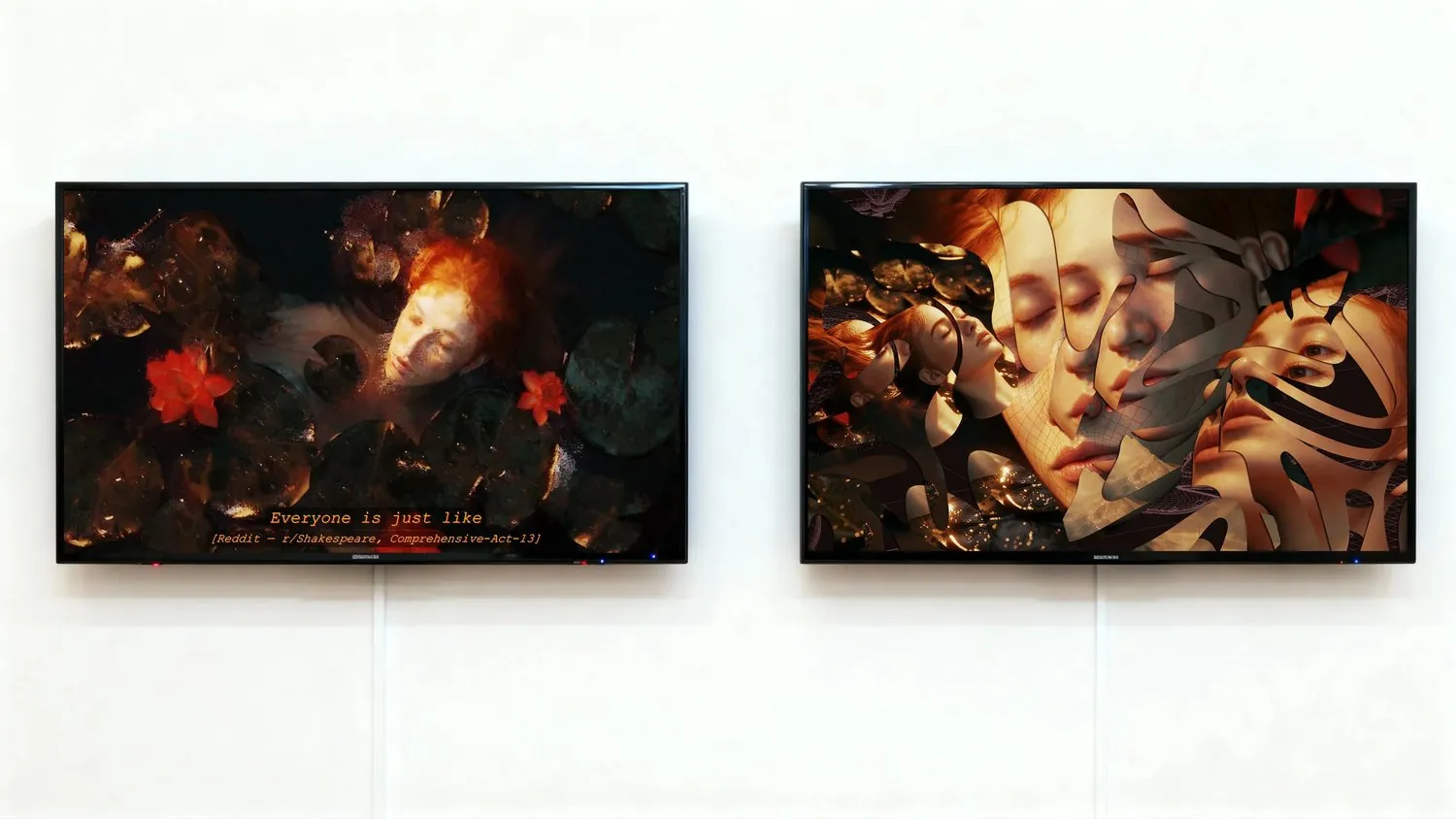
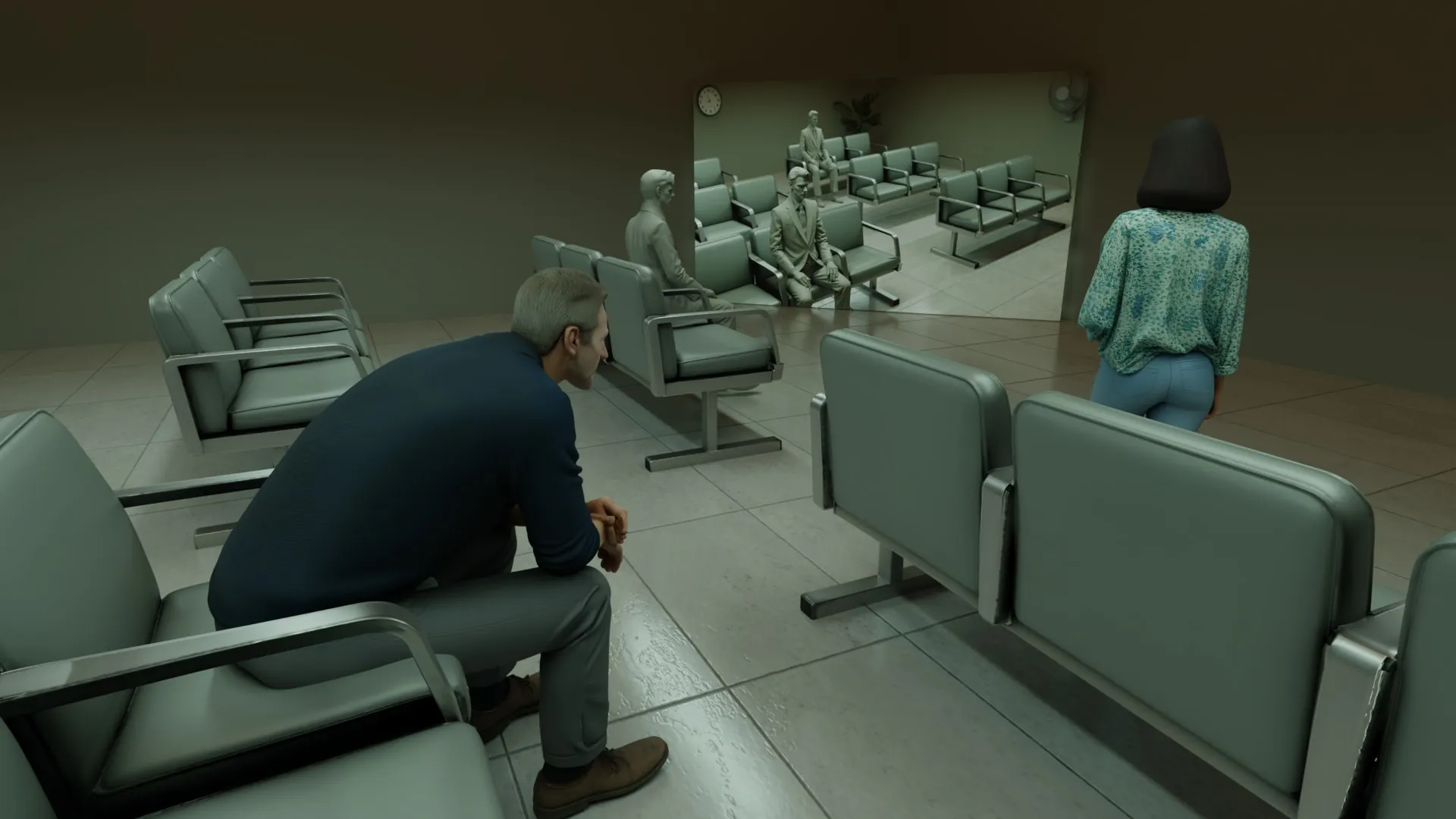
Ophelia Retold, still with text overlay 1:17

Ophelia, Retold

2025 Single-channel video · 4K · 1:17

Ophelia, Retold turns borrowed language into a spoken system. The rendered figure moves through a space built from descriptions that arrived before her, carrying the feeling of a body narrated from the outside. The work is less an adaptation than a record of how interpretation can become an identity when enough voices repeat it, archive it, and feed it back.

Single-channel video with 3D-rendered visuals and AI-generated voice, incorporating sourced text from Shakespeare's Hamlet, academic writings, and online commentaries of Ophelia. Single-channel video, 4K (3840 x 2160), 16:9, 1 min 17 sec, MP4.

Full work page →
0:15 loop

Ophelia, Reassembled

2025 Single-channel video collage · 4K · 0:15 loop

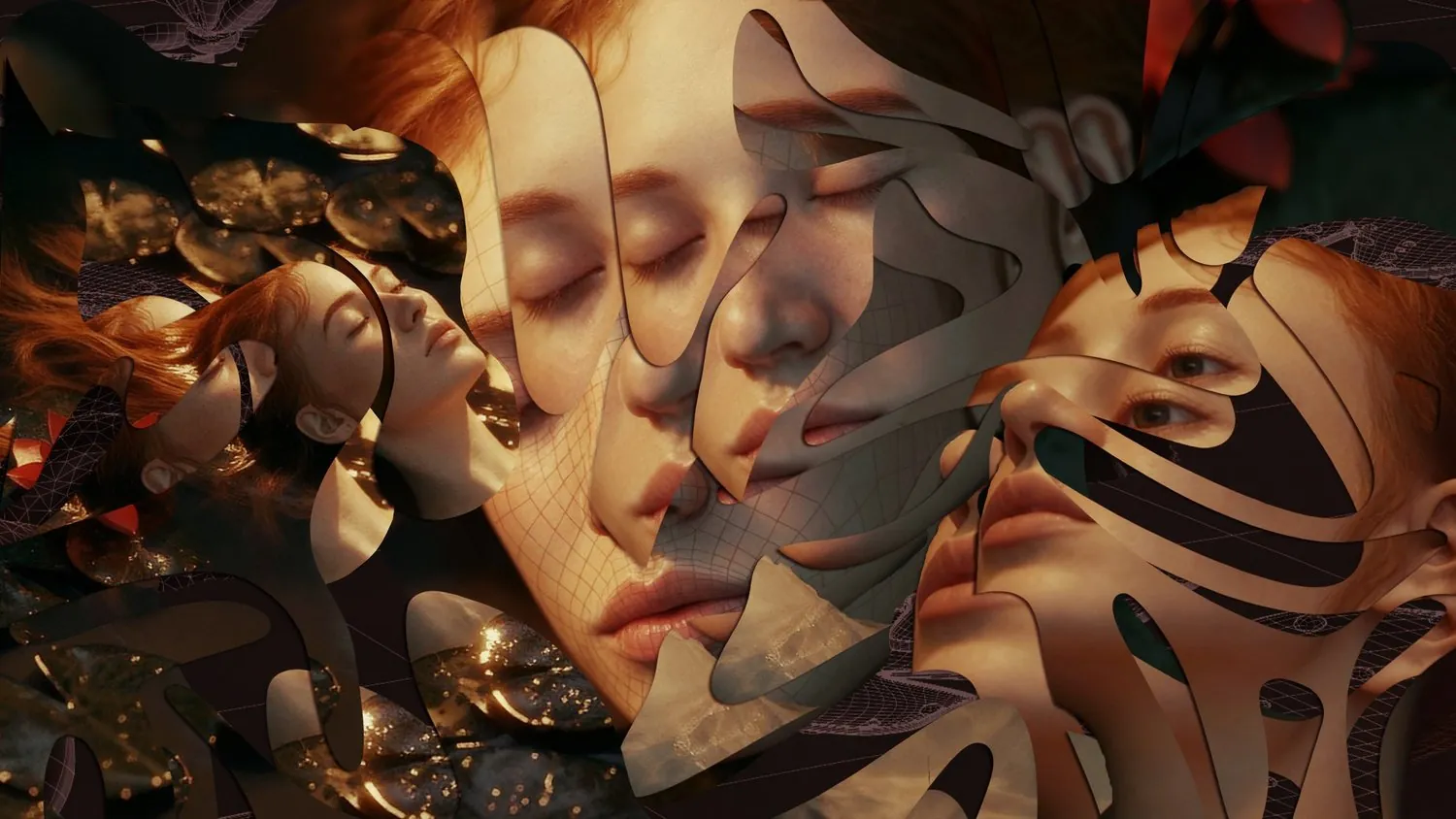
Ophelia, Reassembled is built from 3D-rendered imagery, AI image transformations, texture simulations, and visible mesh overlays. The collage holds the figure together while letting the seams stay visible. Its power comes from refusing polish. The artifacts, breaks, and doubled surfaces show a person being assembled from interpretations that never fully agree with one another.

Single-channel video collage composed of 3D-rendered imagery and AI-generated fragments, layered with digital mesh overlays and simulated textures. Single-channel video, 4K (3840 x 2160), 16:9, 15 sec loop, MP4.

Full work page →

Process

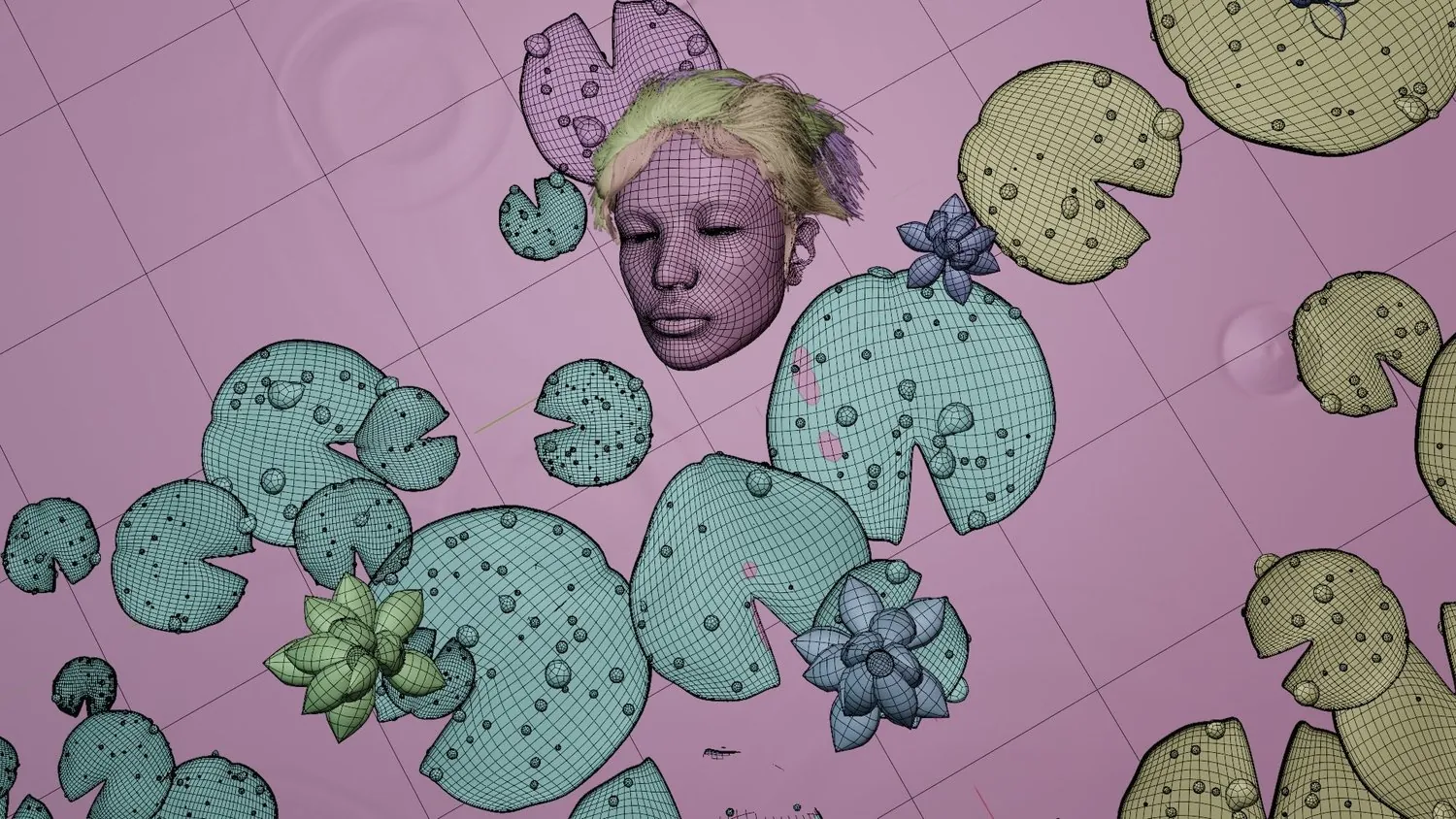
After Ophelia process render
Process render
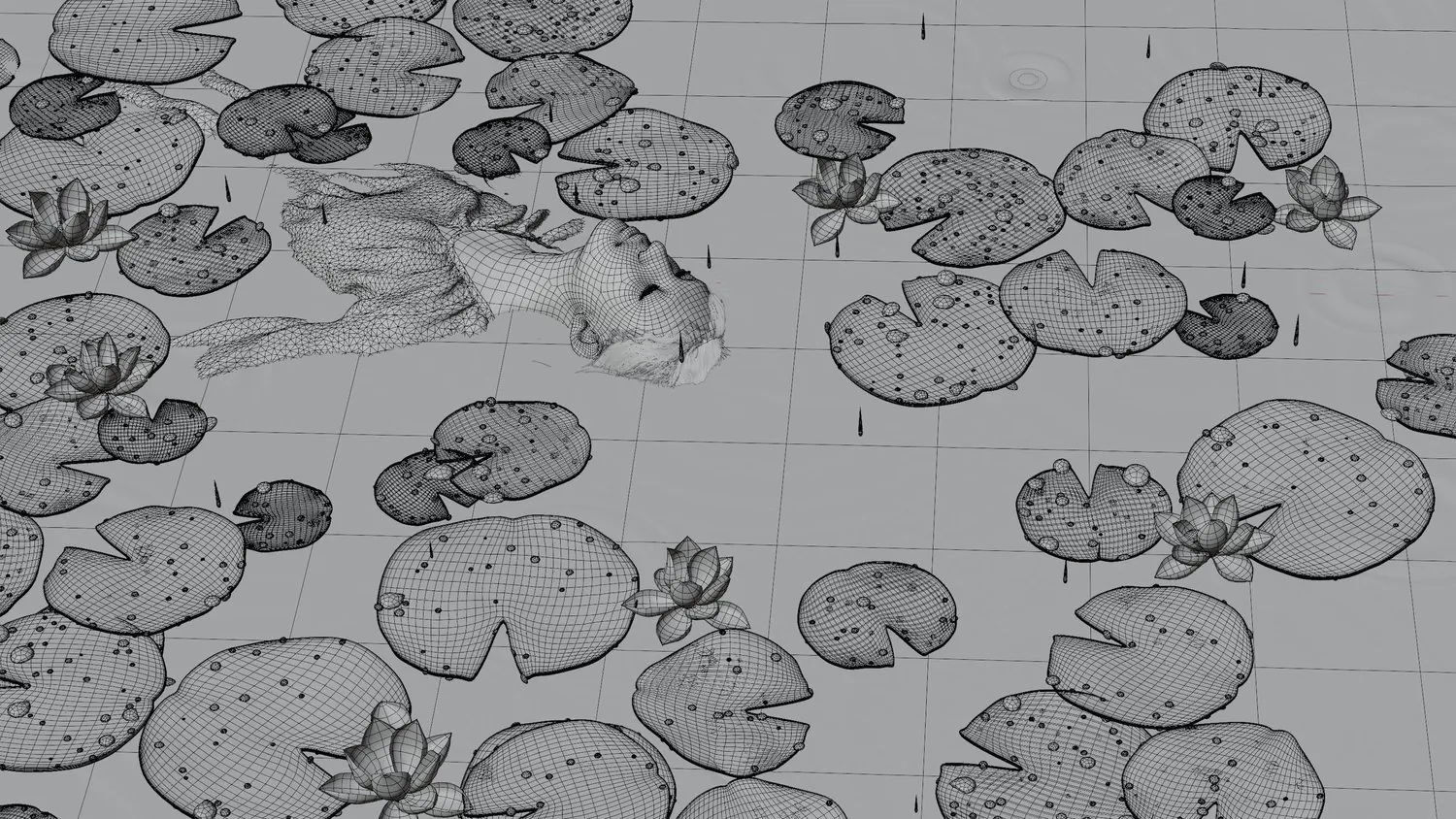
After Ophelia process still
Process still

Both works show how representation becomes a kind of erasure.

I followed how Ophelia has been passed from voice to voice, medium to medium, each time losing a bit more autonomy. Shakespeare's text became Millais' painting. The painting became the default mental image. That image became the basis for countless reinterpretations, academic and casual, each claiming insight into her madness, her victimhood, her symbolic function. Now AI systems scrape all of this and present it as objective knowledge.

In Ophelia, Retold, I gathered these fragments and let an AI voice speak them. The quotes come from their original sources. Some unchanged, others shifted in meaning simply by being placed beside new company, much like Ophelia herself. The 3D-rendered figure searches through space as though looking for herself inside this borrowed language.

Ophelia, Reassembled continues this through image rather than voice. I created initial 3D renders, then transformed them using AI image generation, deliberately leaving the process visible. The meshes, the digital artifacts, the moments where the illusion breaks - these are not flaws but evidence. They show that every image of Ophelia is constructed, that authenticity was never an option.

Together, the works create a loop between being seen and being retold, between image and explanation, never quite resolving into a single stable truth.

Artist statement

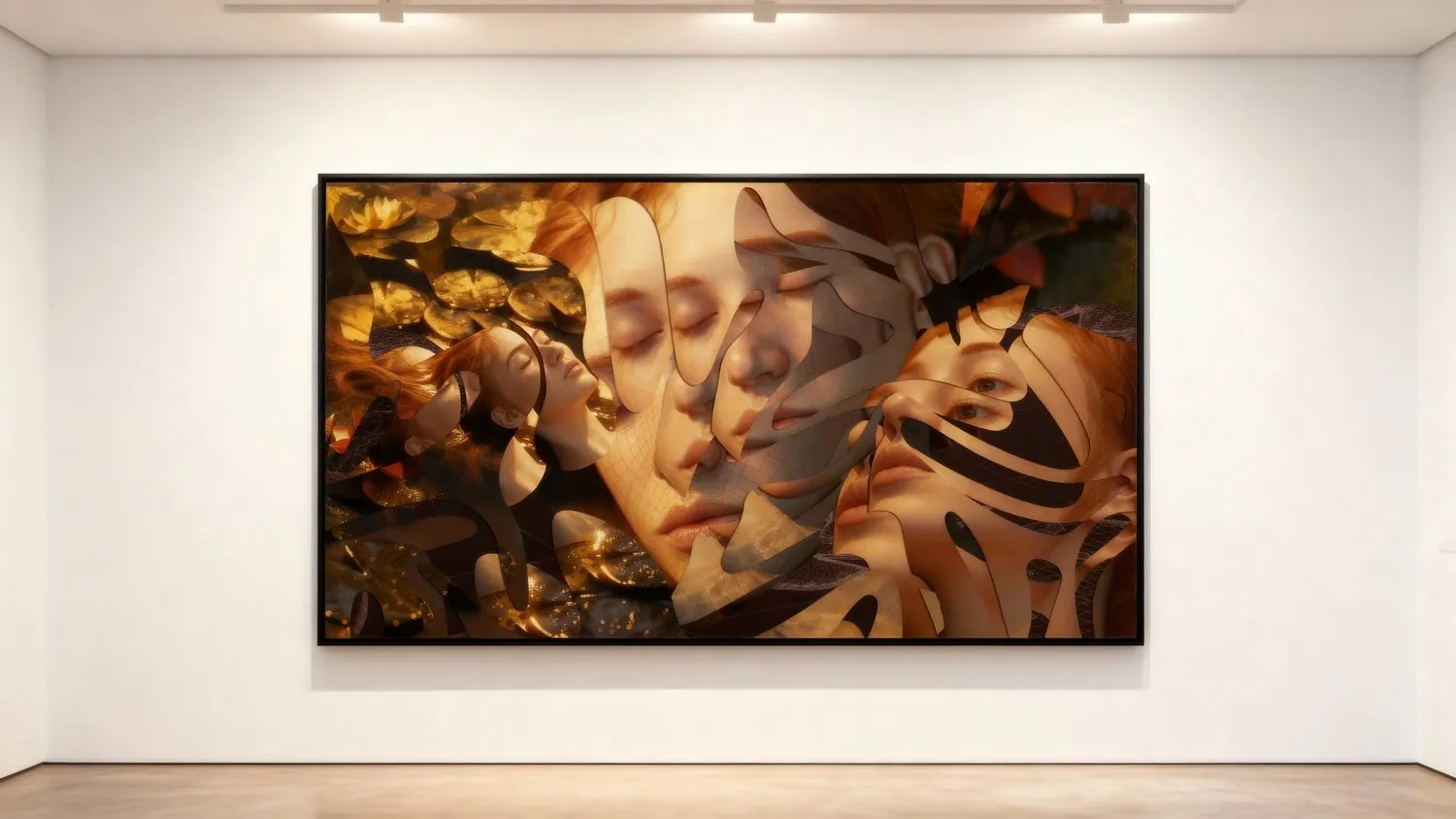
After Ophelia installation mockup with large wall presentation
Installation study

This work began with a personal experience of finding my own image misrepresented online, then discovering how quickly those misrepresentations calcify into accepted fact. Ophelia became the perfect historical parallel, a figure defined almost entirely by other people's interpretations, now endlessly recycled by algorithmic systems that treat all sources as equally valid.

The project does not propose to recover the real Ophelia. That person is irretrievable. Instead, it makes visible the mechanisms of her ongoing construction. They are the voices that claim to explain her, the images that claim to show her, the platforms that claim to know her.

In an age where AI can generate both images and explanations with equal fluency, the line between representation and fabrication has collapsed entirely. We are all, in some sense, becoming Ophelia. Written by others, then rewritten by their machines.

Supporting texts

After Ophelia installation mockup with framed Reassembled work
Installation study

Elaine Showalter - Representing Ophelia: Women, Madness, and the Responsibilities of Feminist Criticism (1985)

The project draws from feminist readings of Ophelia as a figure constructed by spectators, critics, and cultural projection: a character treated as a surface for many perspectives rather than a stable, recoverable self.

John Berger - Ways of Seeing (1972)

Berger's account of looking, appearing, and self-surveillance frames the work's concern with a woman becoming an object of interpretation, especially when visibility is controlled by someone else's gaze.

Roland Barthes - The Death of the Author (1967)

Authorship becomes unstable when a figure is remade through fragments, readers, platforms, and automated systems. Meaning gathers at the point of reception rather than returning neatly to one origin.

Walter Benjamin - The Work of Art in the Age of Mechanical Reproduction (1936)

Benjamin's writing on aura and mechanical reproduction helps frame the project's concern with authenticity after repeated copying, reproduction, and technological mediation.

Sources

Ophelia, Retold incorporates sourced text from Shakespeare's Hamlet, academic writing, online commentary, and interpretive videos about Ophelia and Millais' painting.

Exhibitions

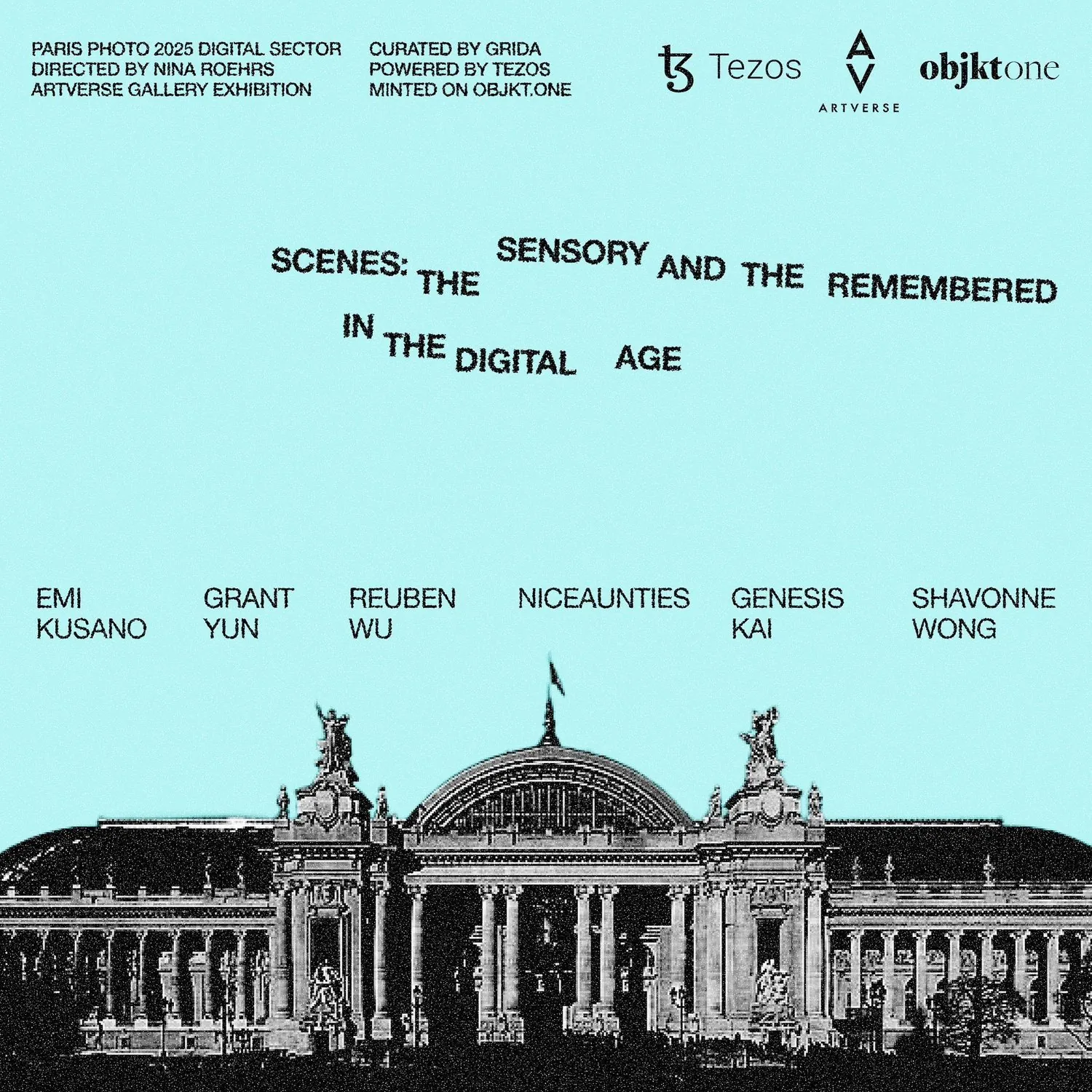
SCENES Paris Photo 2025 Digital Sector exhibition poster naming Shavonne Wong
SCENES, Paris Photo 2025
2025
SCENES: The Sensory and Constructed Image in the Digital Age, Digital Sector, Paris Photo 2025. November 13-16, 2025, with VIP preview on November 12. Organised by ArtVerse Gallery. Shown works: Ophelia, Retold and Ophelia, Reassembled.

Full work page →